AI in EMS: Field Tools That Work vs Marketing Hype
AI in EMS, sorted for crews: which camera scans, barcode reads and protocol checks help on calls, and where ambient recording and AI-drafted charts add risk.
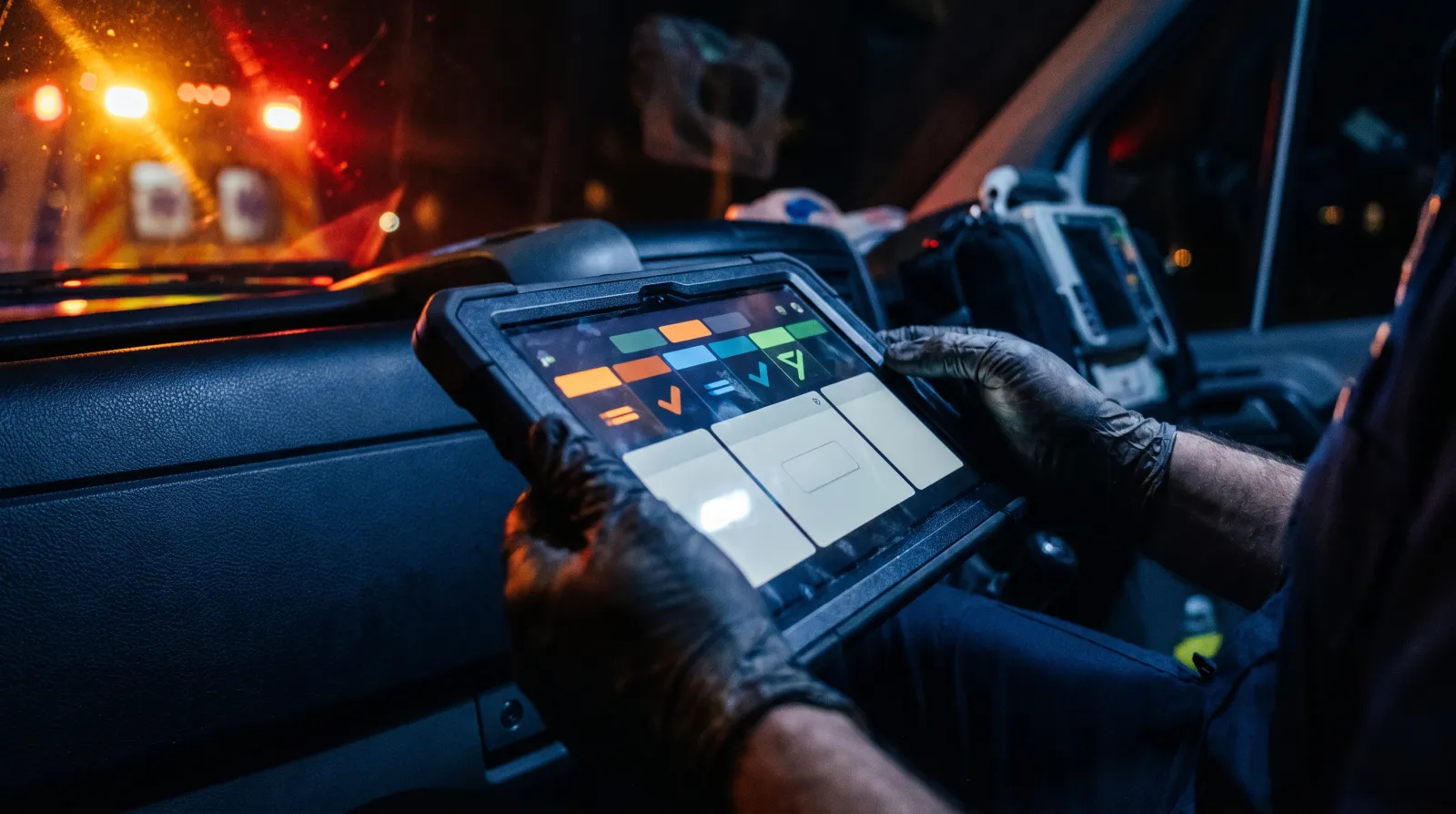
The AI in EMS that actually helps a crew is pretty unglamorous: a camera that reads a pill bottle, a scanner that pulls a name off a driver's license, and protocol checks that catch a missed field before you sign. The flashier pitches, like a microphone that listens to the whole call and writes your chart, come with legal, privacy and accuracy problems that land on the medic who signs.
You've probably seen the booth at the conference. Somebody promises that the software will hear everything, understand everything and hand you a finished narrative. Then you're back on the street at 03:00, in a basement with no signal, and what you actually need is something that works without the cloud and doesn't make things up.
So let's sort it out. Some tools verify what you did. Some tools guess. Knowing which is which protects your patients, your agency and your certification.
Which AI tools actually help paramedics at 03:00?
Crews don't care about buzzwords. When you're working a sick patient in bad light, a tool has to be fast, predictable and easy to check.
Reading medication labels. Look-alike vials and pill bottles with tiny print are a real hazard on a stressful call. A computer vision medication scanner uses the tablet camera to read the label and match the drug name and strength against a medication list. When that reading happens on the tablet itself, it keeps working in a basement or a dead zone. We cover one example in our post on the MedsAI bedside medication scanner.
Scanning IDs. Typing names, birth dates and addresses on a touchscreen with gloves on is how typos happen. Most U.S. driver's licenses carry a two-dimensional barcode on the back that holds the same demographic data printed on the front. A scanner can drop that straight into the chart for you to confirm, which saves time and cuts transcription mistakes.
Checking against protocol. Good protocol checks compare what you've entered against your agency's standing orders as you go. Log a pediatric seizure and it can surface the weight-based midazolam dose from your own protocol. It's working from rules your medical director already approved, so you can always see why it fired.
The common thread: these tools check your work against something real, a label, a barcode, a protocol. And because they can run on the device, they keep working with zero bars. If you want the details on how offline charting holds up, see how offline ePCR sync really works.
What's the problem with ambient listening in the rig?
Ambient voice charting gets pitched as the cure for paperwork. Put a microphone in the patient compartment, let software listen to the call, and get a drafted chart at the end. On paper it sounds great. In the back of a moving ambulance, it runs into trouble fast.
Noise. The box is loud. Diesel rumble, sirens, radio traffic, suction and the AC blower all compete with a patient who can barely speak above a whisper. Speech recognition has a hard time in that kind of noise, and the worst transcripts tend to come from the busiest calls, like a working arrest.
Consent and privacy. State recording laws vary. Some states require everyone in a conversation to agree before it's recorded, and the rules for in-person conversations differ from phone calls. An always-on microphone can pick up a family member, a bystander or a minor who never agreed to anything. Before any agency turns on continuous recording, it should get a legal review of its own state's law.
Discovery. Audio and transcripts stored by a vendor are records. In a lawsuit or a criminal case, attorneys can request them, and offhand comments between partners can end up in front of a jury.
None of this means voice tools are useless. A medic choosing to dictate a narrative, then reviewing every word before it goes in the chart, is a very different thing from a microphone that records everything and writes the report on its own.
Rule engines or generative AI: which protects your cert?
When you evaluate AI clinical decision support for paramedics, the first question is whether the tool follows fixed rules or generates its own text.
A rule-based system does the same thing every time. If condition A is true, rule B fires. Ask it to calculate burn surface area on a child and it applies the approved formula the same way on every call. There's nothing creative about it, and that's the point.
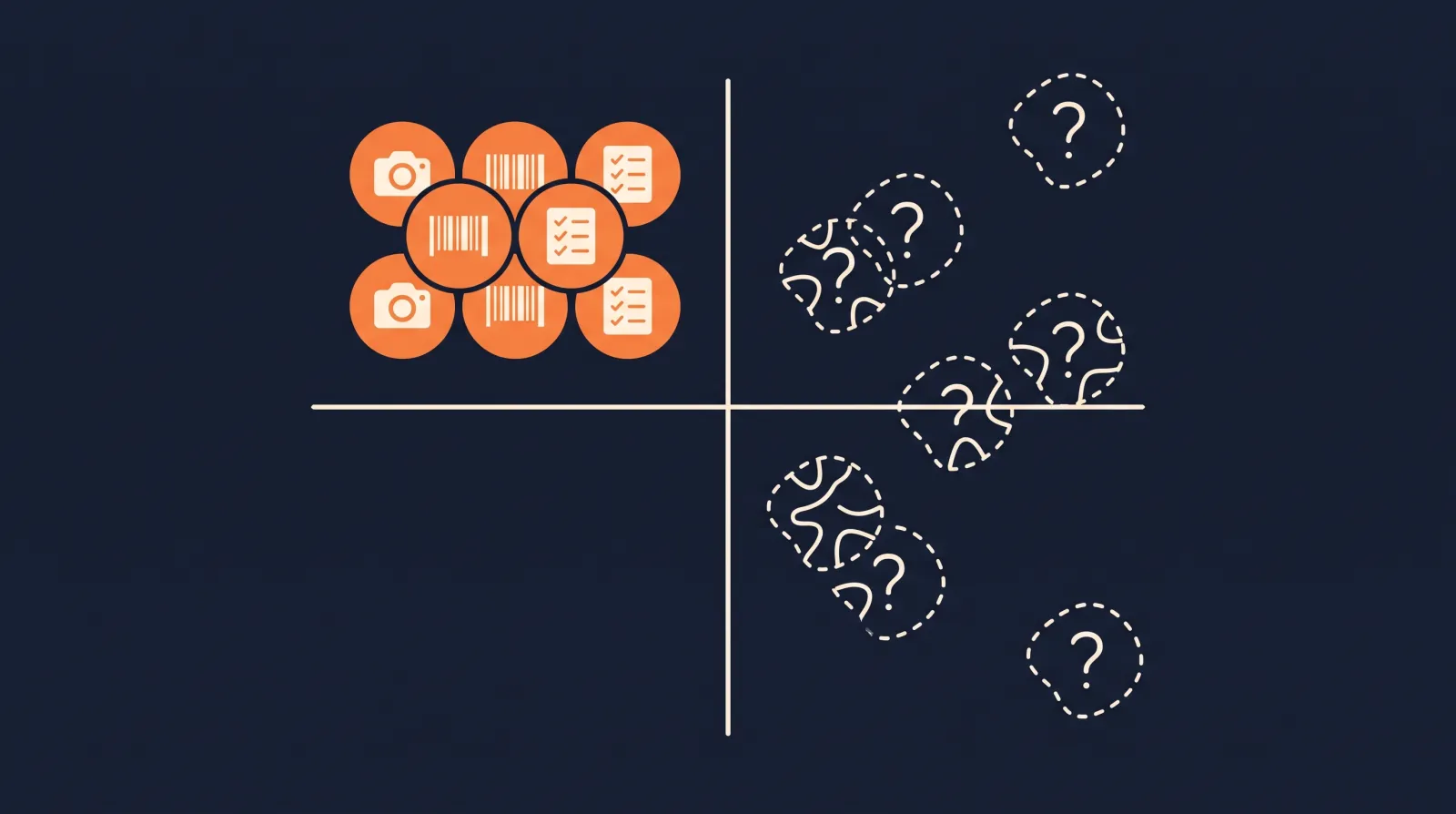
Generative AI works differently. It predicts what text is likely to come next based on patterns it learned. That's handy for some jobs, but when it drafts a chart unsupervised, it can fill gaps with findings nobody documented: clear lung sounds you never listened to, an IV size you never placed, a set of vitals that looks complete but isn't real.
| Approach | How it works | Reliability on calls | Documentation risk |
|---|---|---|---|
| Rule-based protocol checks | Fixed logic from approved protocols | Predictable, same result every time | Low, flags gaps without writing care |
| On-device camera and barcode reading | Reads labels and IDs on the tablet | Works without signal | Low, crew confirms each result |
| Machine learning for staging | Finds patterns in past call data | Useful for planning, not bedside care | Low, stays in dispatch and planning |
| Unsupervised AI narrative drafts | Generates text that sounds plausible | Can invent findings and care | High, the signer owns every word |
Here's the part that matters most for you. The medic who signs the chart owns every word in it. Signing a narrative that includes care you didn't give, or findings you didn't assess, is a false record. If that chart supports a claim to Medicare or another payer, it can raise fraud exposure for you and your agency. Read every line before you sign, no matter who or what drafted it.
Where does predictive dispatch fit in 911 operations?
Machine learning earns its keep away from the stretcher. Some EMS systems use predictive tools to help decide where to stage units, based on patterns in past call volume, time of day, weather and traffic. The idea is to have units closer to where calls are likely to come in rather than parked at the station.
What matters is who stays in charge. These tools give dispatchers and supervisors a suggestion, not an order. A road closure, a working fire or a big event changes the picture, and a person who knows the district makes the call. Human judgment keeps control of triage and unit assignment.
What do medical directors expect from field AI?
The general expectation from state EMS offices and medical directors is simple: clinical responsibility stays with the provider. You can't hand off a wrong dose to the software.
If a prompt suggests a dose outside your local protocol and you push it, that's on you. That's why decision tools should stay advisory. Showing protocol text, displaying a dosing reference or flagging a blank field is fine. Giving clinical orders on its own is not.
Expect your medical director and QA team to want a clear trail, too. If a tool fires an alert, the record should show what triggered it and whether the crew accepted or dismissed it. That kind of trail makes chart review fairer for everyone, which we get into in our post on building fair chart audits.
Which five questions should you ask an AI vendor?
Before your chief or IT lead signs anything with "AI" in the description, ask these:
- Does it run on the tablet? Field tools have to work without signal. Ask which features run on the device and which need a connection.
- Where does patient data go? Ask for a plain data flow diagram. Find out whether audio, photos or patient details are ever used to train the vendor's models.
- Do clinical alerts come from your protocols? Ask how alerts are built and who approves them. You want rules your medical director signed off on.
- Will they sign a HIPAA business associate agreement? Any vendor handling patient data should sign one, and your agency's counsel should review the terms.
- What gets logged? Ask what the audit trail records for scans, prompts and manual entries, and how long it's kept.
For a broader buying checklist, see how to choose ePCR software.
How do the two approaches play out on a real call?
Frequently asked questions
Can ambient recording in an ambulance break wiretap laws?
It can, depending on your state. Some states require every party to consent before a conversation is recorded, and rules for in-person conversations vary. An always-on microphone that captures family members or bystanders without consent creates legal risk, so get a legal review before turning one on.
How well do medication scanners handle torn labels?
It depends on the tool and how much of the label is left. Better scanners look at several clues at once, such as partial drug names, strengths and code fragments, and match them against a medication list. When a label is too damaged for a confident match, a good scanner should tell you so instead of guessing. Either way, you confirm the result before it goes in the chart.
Is the paramedic liable for errors in an AI-drafted chart?
Yes. The person who signs the record is responsible for what it says. Signing a narrative with invented vitals or exams you didn't perform creates a false record, and if it supports a billing claim, it can bring fraud exposure. Check every fact before you lock the chart.
Can field AI tools work without cell service?
Rule-based checks and camera tools that run on the tablet can work offline. Tools that send audio or text to a remote server for processing need a connection, so they stall in dead zones and basements until signal returns.
How do validation rules help with NEMSIS 3.5.1?
Validation rules check the chart against national and state data requirements while the crew is still entering it. They flag missing fields, time errors and protocol conflicts before the chart is submitted, which cuts down on rejected exports. Our NEMSIS 3.5.1 field prep guide walks through what to check.
Sources
- NHTSA Office of EMS (external site)
- NEMSIS Technical Assistance Center (external site)
- HHS: Health Information Privacy (HIPAA) (external site)
- Reporters Committee for Freedom of the Press: Reporter's Recording Guide (external site)
- AAMVA: Card Design Standard (external site)
- FDA: Artificial Intelligence in Software as a Medical Device (external site)