NERIS Transition for Fire Departments: Field Guide
A field guide to the NERIS transition for fire departments: NFIRS retirement dates, modular incident reports, GIS boundaries, and keeping EMS runs PHI-free.
The NERIS transition for fire departments is no longer a someday project. NFIRS stopped taking new incidents after the 2025 calendar year, and NERIS is now where federal fire incident data goes. If your department is still mid-switch, this guide covers the dates that mattered, what changes on the report, and the cleanup work that keeps officers from charting twice.
If you ride the front seat or run records, you'll feel this change. The three-digit codes you memorized years ago are gone. In their place you get a report that branches with the call, location pinned to real coordinates, and a separate path for the medical runs that make up most of your volume.
When did NFIRS end, and what was the timeline?
NFIRS wound down in early 2026. The Texas State Fire Marshal's Office laid out the dates plainly: no new NFIRS incidents after 2025, all NFIRS data (including 2025) due before January 31, 2026, NFIRS partially non-functional on February 1, 2026, and the system gone on February 22, 2026. Other states published similar dates, so check what your own state fire office announced.
The rollout itself came in waves. The U.S. Fire Administration (USFA) brought departments onto NERIS by FEMA region, in phases across most of 2025, and a few states held off until 2026. Texas departments, for example, started on NERIS July 1, 2025. Your state's calendar was the one that actually set your deadline.
Grants are where this gets real. Texas spells out that departments receiving FEMA grants must keep reporting incidents during the grant's period of performance, and that an award may be changed or withdrawn if reporting stops. If your NERIS account isn't live and sending, that's a conversation you don't want to have with your grants coordinator. National updates live on the USFA NERIS page, linked under Sources below.
Why do some departments still report two ways?
Federal intake moved to NERIS, but not every state system moved at the same speed. Some state clearinghouses kept their own reporting rules, older servers, and long vendor contracts. If your state still asks for something beyond the federal NERIS submission, sending to NERIS alone may leave you short at home. Your state fire marshal's office can tell you what it still expects.
Mutual aid makes it messier. Say there's a working warehouse fire where your engine runs second-due into the next town. If the two departments are on different reporting setups, or one is still finishing onboarding, matching the incident across both records takes extra work.
The goal is simple: one report from the officer, and the software builds whatever each agency needs from it. Nobody wants to fill out two forms for a car fire. If you're shopping for a platform, our guide on how to choose ePCR software walks through what to ask.
How is a NERIS report different from NFIRS?
The big shift is flat codes versus a branching incident. NFIRS made you squeeze a complicated call into one primary code. NERIS lets the report follow what actually happened on scene.
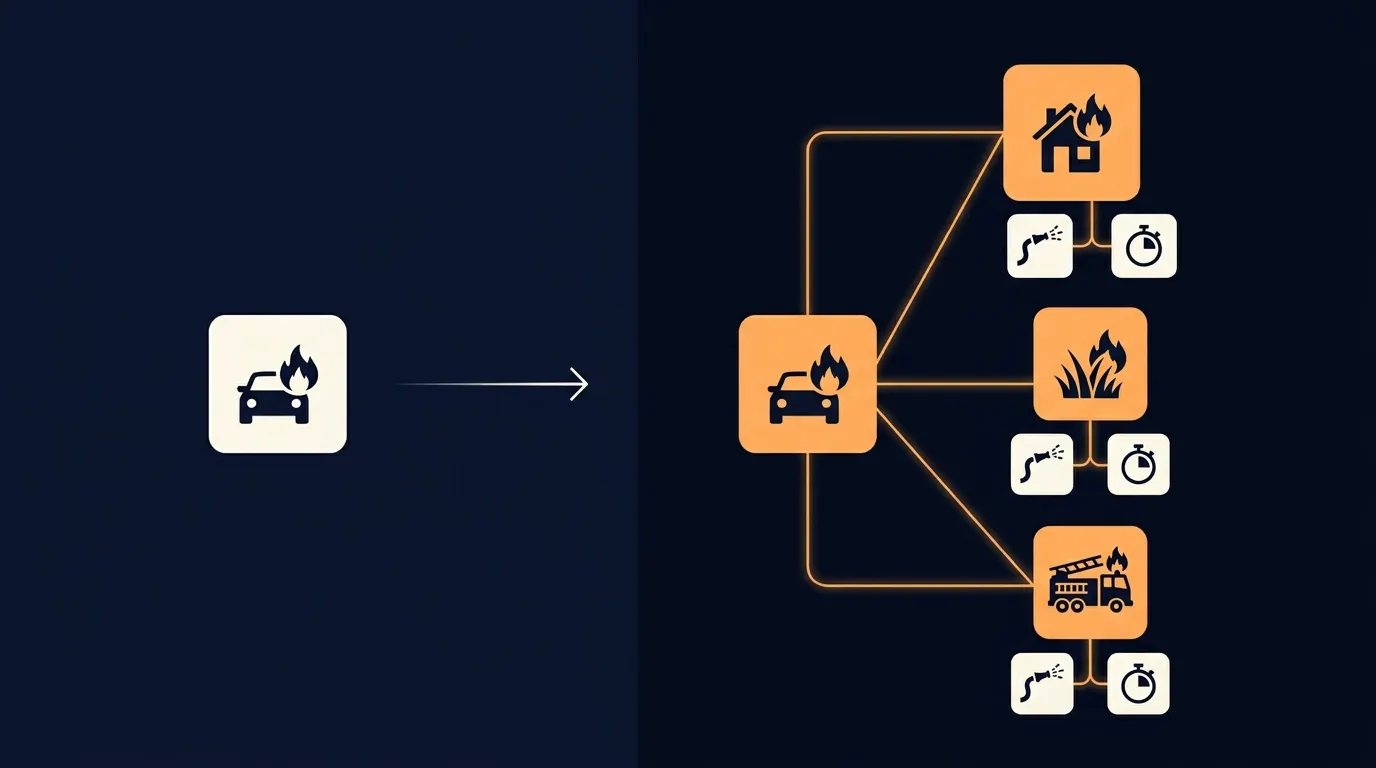
Here's where the difference shows up on the fireground. Under NFIRS 5.0, a car fire that caught a garage and then lit up the grass forced a compromise. You picked one code, like 131 for a passenger vehicle fire, and buried the garage, the hose lines, and any burns in checkboxes and narrative.
Under NERIS, that same call becomes a linked set of pieces. The car fire is logged first. The garage gets its own exposure branch. The grass fire gets its own branch, with the actions each rig took. Nothing gets lost in a catch-all code.
Unit tracking changes too. NFIRS mostly cared about when a rig went en route, arrived, and cleared. NERIS is built to capture more of what crews did on scene, with tactical timestamps for milestones like command established, primary search complete, water on the fire and fire under control. That gives chiefs a clearer picture of how the work actually unfolded.
What GIS and location data does NERIS need?
Location data gets a serious upgrade. NFIRS would take a rough intersection or an old box number. NERIS expects real coordinates for the incident.
When you look at NERIS fire reporting software, ask how it handles latitude and longitude for the incident location, and whether it uses the standard GPS coordinate format NERIS expects. The NERIS data standard defaults to WGS 84 (EPSG:4326), the same latitude and longitude system GPS uses. If an officer drops a pin on an apartment building, the report should carry that actual spot, not the center of a tax parcel.
Your department's footprint matters too. During onboarding and verification, departments confirm their details in the NERIS registry, including:
- Station locations
- Primary response boundaries
- First-due response zones
- Mutual, automatic and contract aid relationships with other departments
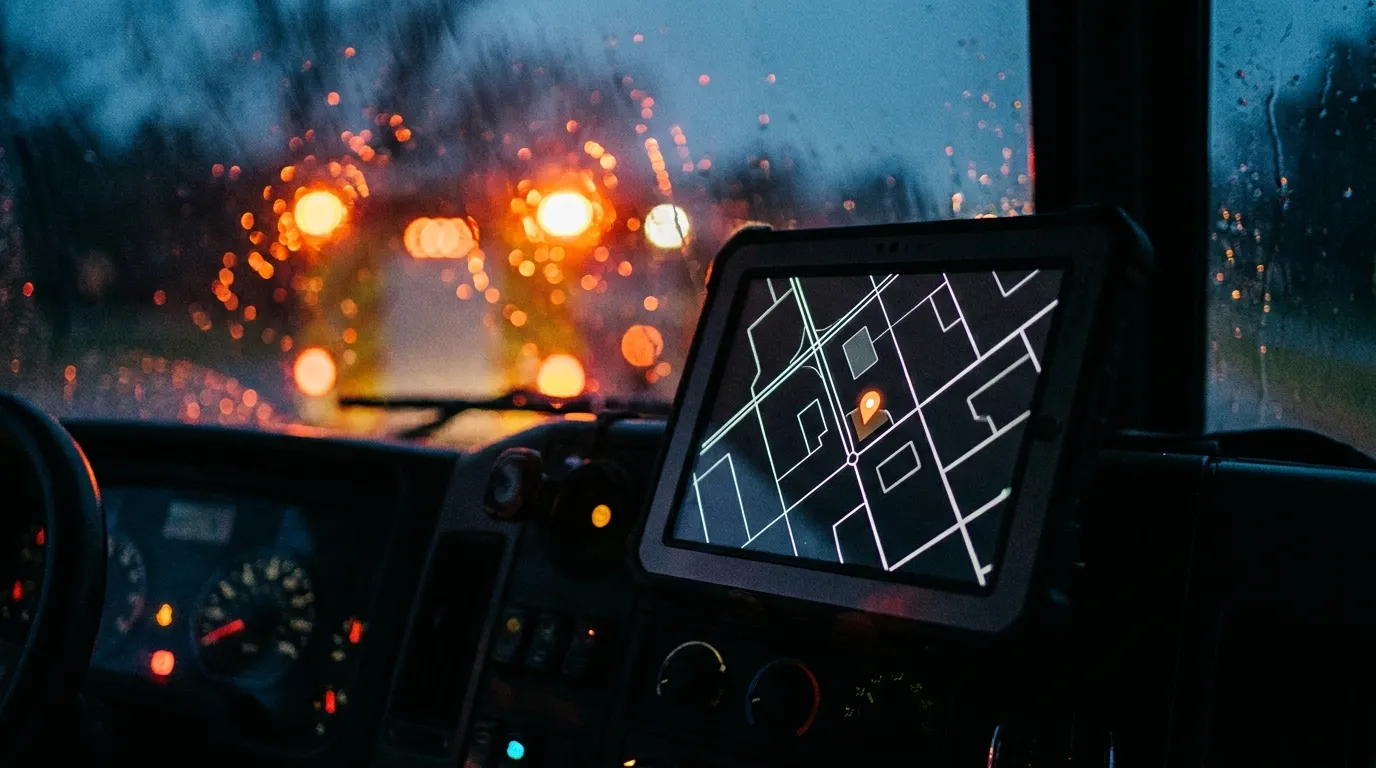
In the cab, a mounted tablet that marks "arrived" with the rig's position takes some of the guesswork out of timestamps. If your times still don't line up between dispatch and the monitor, read our piece on CAD timestamp and clock mismatch fixes.
How do you report medical runs without exposing PHI?
Medical calls are the bulk of the job. USFA's run profile for 2020 found that 64% of fire department runs reported to NFIRS were EMS and rescue calls. That's a lot of reports touching patient care.
NERIS is a fire operations database, not a patient care record. Federal fire data feeds research and public reporting, so it shouldn't carry protected health information (PHI). Names, birth dates, and clinical notes don't belong in a fire incident report.
At the same time, officers shouldn't retype a medical run into the fire report after the medics already charted it. Double entry wastes time and creates mismatches between dispatch, the fire report, and the patient chart.
The fix is separating the two automatically. When an engine assists on a medical call, the software can pull the operational pieces, like dispatch times, unit times, and a general call type, without carrying over the clinical chart. We cover how that hand-off works in NERIS auto-export with PHI redaction. On the patient care side, the same discipline applies to state EMS reporting, covered in our NEMSIS 3.5.1 field prep guide.
How does a fire department finish the NERIS transition?
If your department isn't fully on NERIS yet, you're behind, but it's fixable. Here's a five-step checklist:
- Pin down your vendor's status. Ask if your records system is approved to submit to NERIS, and get a firm date in writing for when its connection will be live for your department.
- Clean up GIS files and rosters. Work with county GIS staff on your station locations and response boundaries. Make sure unit names in CAD match what's in your NERIS registry.
- Call your state fire marshal's office. Ask if your state has any reporting steps beyond the federal NERIS submission.
- Train line officers on the branching report. Teach captains to log exposures, actions, and on-scene milestones instead of hunting for one code.
- Run practice calls first. Use whatever test or training environment your vendor or NERIS offers to send sample incidents and catch errors before they hit live data. Ask your vendor what's available before your go-live date.
What does a modular report look like on a real call?
Frequently asked questions
When did NFIRS shut down?
NFIRS stopped accepting new incidents after the 2025 calendar year, with 2025 data due by January 31, 2026. Texas, for example, listed February 22, 2026 as the date NFIRS went away. Check your own state fire office for its exact dates.
What makes fire RMS software NERIS ready?
It should connect directly to NERIS, pass NERIS validation checks, and handle secure sign-in with the federal system. It should also map incident locations to real coordinates and keep patient information out of the fire report.
How do mutual aid calls work across departments?
Each department reports its own units, times, and actions under its own NERIS department ID. If your partner department is set up differently, talk through incident numbering ahead of time so both records line up.
Does NERIS require patient medical records?
No. NERIS is a fire incident system. The fire report captures times, unit actions, and general call types. Clinical care notes stay in the separate patient care report.
What happens if a department stops reporting?
You lose your voice in national fire data, and regional planners lose your community's numbers. If you hold a FEMA grant, Texas notes that stopping incident reporting during the grant's period of performance can lead to the award being changed or withdrawn.
Getting through the NERIS transition doesn't mean changing how you fight fire. Clean up your GIS boundaries, train officers on the branching report, and use tools that keep fire and medical records connected without mixing PHI into the fire side. To see how Mobile Medic handles NERIS exports alongside field charting, take a look at our features overview.
Sources
- U.S. Fire Administration: National Emergency Response Information System (NERIS) (external site)
- Texas Department of Insurance, State Fire Marshal's Office: NERIS resources (external site)
- USFA NFIRS Data Snapshot: Fire Department Overall Run Profile (2020) (external site)
- NERIS program site (Fire Safety Research Institute) (external site)
- NERIS API data specification (OpenAPI) (external site)
- Illinois Office of the State Fire Marshal: National Emergency Response Information System (NERIS) (external site)